Coty paid $600M for half of Kylie Cosmetics — then its filings put revenue at a third of the public figure
A privately held creator brand can publicize a sales figure no auditor stands behind. Once Coty bought control and folded Kylie Cosmetics into GAAP books, the brand’s revenue became a line in an SEC filing — and it ran about a third of the publicized number.
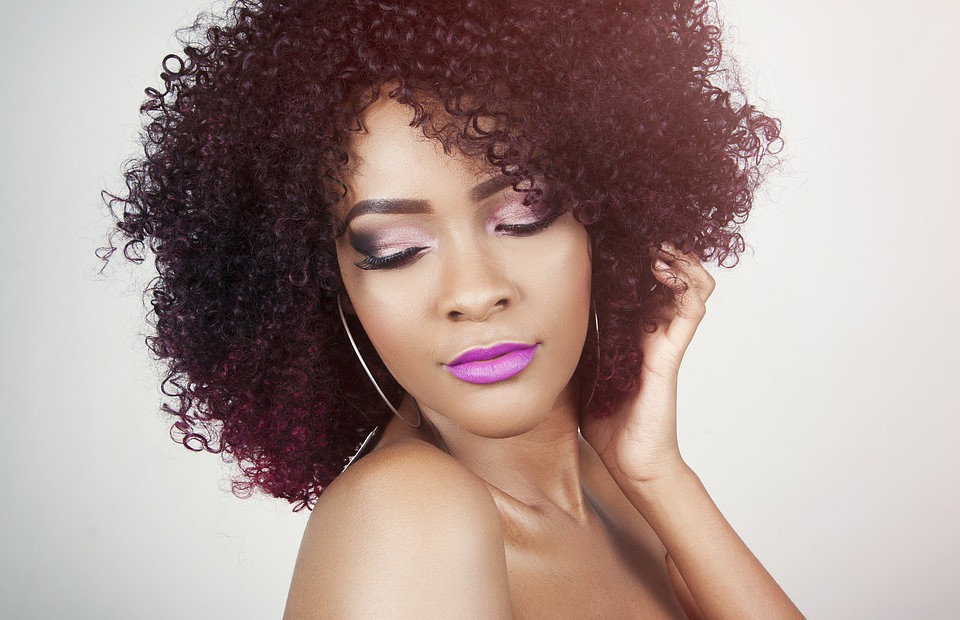 Photo: public domain
On November 18, 2019, Coty filed an 8-K announcing it would “acquire a 51% ownership in the partnership for $600M” — Kylie Jenner’s beauty business, Kylie Cosmetics and Kylie Skin. At $600 million for half the equity, the deal implied a roughly $1.2 billion valuation for the whole company. The same release carried the number that mattered more: “Kylie Cosmetics realized an estimated $177M net revenues for the trailing twelve months.”
That line was the first audited-adjacent figure the public had seen for a business the Jenner camp had spent years framing as far larger. A privately held brand can put a “sales” number into a magazine that no auditor stands behind; once Coty consolidated Kylie, the same business reported revenue under GAAP in an SEC filing, and the reported figure came in well short of the publicized one.
The gap surfaced six months after the deal closed. Forbes, which in March 2019 had crowned Jenner the world’s youngest self-made billionaire and valued Kylie Cosmetics at $900 million, reversed itself on May 29, 2020. Its investigation used Coty’s newly filed documents to reset the brand’s 2018 revenue to about $125 million, against the roughly $360 million the family had promoted to the press. Forbes also accused the family of fabricating financials over multiple years; Jenner denied it, and her attorney called the accusation “unequivocally false” and demanded a retraction.
What the purchase price actually bought
Coty’s FY2020 10-K allocates the $600.0 million across the assets it acquired, and the split shows what Coty was paying for. Only $128.6 million landed as goodwill. The bulk went to two contractual intangibles built on Jenner’s audience: a $369.0 million collaboration agreement and a $280.0 million license agreement, with $27.0 million for customer relationships and a $212.9 million noncontrolling interest offsetting the rest.
Coty did not buy a factory or a balance sheet of inventory; it bought the contractual right to put Kylie’s name and promotional reach on products, then amortize that right. That is where the audience converts to a balance-sheet asset, and the publicized “sales” number never measured it.
The number the consolidation forced open
For the fiscal year ended June 30, 2020 — a partial period, since the deal closed January 6, 2020 — Coty reported that “net revenues and net loss of King Kylie included in the Company’s Consolidated Statements of Operations were $52.0 and $11.7, respectively.”
A bit less than six months inside Coty produced $52.0 million in net revenue and an $11.7 million net loss. Annualized, the partial-year run-rate sits near $100–110 million — short of the $177 million trailing figure Coty cited at announcement, and far below the $360 million the family had promoted. The brand generated real revenue and posted a net loss over the period. The publicized “sales” had measured a looser figure; the consolidated statement reported net revenue an auditor signed.
No Kylie write-down in the filings
A revenue reset of this size invites a search for the matching impairment — the entry where Coty marked the Kylie intangibles down to a smaller business. The filings do not record one.
Coty’s FY2020 10-K reports $434.0 million in asset impairment charges, which its MD&A attributes to “$329.0 related to indefinite-lived other intangible assets and $105.0 related to goodwill” tied to its older mass-beauty portfolio, not Kylie. In FY2021, Coty states it “did not incur any asset impairment charges.” The FY2022 charge of $31.4 million traces to the Max Factor and Bourjois trademarks and the company’s exit from Russia, again not Kylie. The Kylie license and customer-relationship intangibles stayed on Coty’s books at gross value.
Get this in your inbox
What it cost Coty, and what came after
The reset carried a cost beyond reputation. A securities class action filed in the Southern District of New York names the Kylie Brands transaction among the alleged disclosure violations, claiming Coty overpaid for an inflated brand; the complaint puts the one-day stock reaction to the Forbes report at roughly 13%. Coty relaunched Kylie Cosmetics with reformulated, vegan products in 2021. By August 2023, Jenner was reported to be exploring buying Coty’s stake back, with talks said to have stalled over valuation.
For anyone underwriting a creator-led brand, the operative number is not the one in the founder’s interview but the net revenue line that appears the first time the brand is consolidated, audited, or diligenced — and the Kylie case puts that spread at roughly three times. The diligence question is whether the gap is measurement or fabrication, and the answer sets what the asset is worth.

Elliot writes about the companies, economics, and decisions shaping the creator economy, with a focus on campaign performance, attribution, and creator-led businesses.
More from Elliot Padfield →More in Creator-Led Businesses
All in Creator-Led Businesses →
e.l.f. took a $57.6M charge because Rhode beat its targets — how an earnout punishes a winning acquisition
Hailey Bieber's Rhode ran so far past its earnout thresholds that e.l.f. marked the liability up $57.6M — flipping Q4 to a $49.4M GAAP loss on 35% sales growth.
Prime committed to buying 18.5M cases of itself a year — then a $67.7M suit showed demand never arrived
Congo Brands committed to buy 18.5M cases of Prime a year — a $67.7M bottler suit and Prime's 71% UK revenue drop show how far real demand fell short.

e.l.f. spends a quarter of sales on marketing and grew 28 straight quarters — the always-on creator loop behind it
e.l.f. held marketing near a quarter of net sales while L’Oréal’s ad-and-promo ran 32.4% — and rode 28 straight quarters of growth to $1.31B. Here’s the always-on creator engine closing the gap.